English
 Turkish
 Deutsch

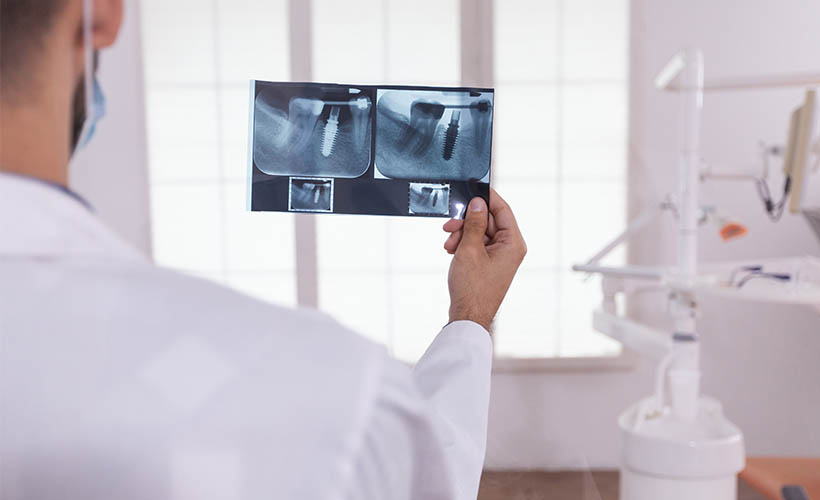
Box technique is generally a procedure used in cases of severe jawbone resorption. Especially when implant treatment is planned to solve the missing tooth problem but the jawbone volume is not sufficient, this method can be preferred. When the lost jawbone tissue needs to be rebuilt for various reasons, this technique is used to reconstruct the area.
The materials used are prepared in a laboratory environment. We can say that they are produced in a form very similar to human bone. To reconstruct the lost jawbone, these prepared materials need to be placed onto the jaw.
Importantly, there is no need to harvest bone blocks from the patient before the procedure. Specially prepared bone substitutes are used together with poly D, L-lactic acid (PDLLA). In this way, the need to take bone from the patient’s own body is eliminated. This makes it a highly patient-friendly technique. Before addressing frequently asked questions such as which patients are suitable or how long the treatment takes, let’s look more closely at how the procedure is performed.
How Is The Box Technique (Grafting) Performed?
First of all, it should be emphasized that the goal of the box technique is to reconstruct the jawbone. Rebuilding the lost jawbone in three dimensions prepares the bone for implant placement. This technique can be applied with a high success rate. In the past, when the jawbone was severely resorbed, patients were limited to using only removable dentures. Today, thanks to this technique, which makes it possible to support the jawbone, implant treatment can also be offered. Therefore, patients who do not want to use removable dentures can comfortably choose this option to get rid of missing teeth.
This method is not only used in dentistry. It has also been preferred in plastic surgery for a long time and, in rare cases, even in neurosurgery. Polylactic acid (PLA) plates that are highly compatible with body tissues are prepared and placed onto the jawbone as part of the box technique. In the procedure, animal bones are processed and transformed into bone grafts. These grafts allow new, healthy bone tissue to form after the operation. However, it should be remembered that the formation of new bone usually requires a waiting period of 6 to 8 months.
For some patients, this period may be slightly shorter or longer. Once a healthy bone structure has formed, implant treatment can be started. Patients are thus freed from missing teeth and at the same time gain a more aesthetic dental appearance. Moreover, there is no need to harvest bone from any part of the patient’s body for the procedure. This feature is one of the important reasons why this technique has become increasingly popular.
For Which Patients Can The Box Technique Be Used?

Advancing age is one of the most common reasons for jawbone loss. Therefore, the box technique is frequently applied in older patients. If the jawbone volume is not sufficient, implant treatment cannot be performed safely. For this reason, the jawbone must first be reconstructed. At this point, the method commonly known as the “box technique” comes into play. Patients with severe jawbone loss are the group in which this procedure is most often preferred.
A frequently asked question is whether patients who have used full dentures for many years can also benefit from this treatment. The answer is yes; this procedure can be safely performed on these individuals as well. Having used dentures in the past does not mean that the jawbone can no longer be rebuilt. Certain surgeries or traumas may also cause bone loss in the jaw. In such situations, the box technique can also be applied.
Sometimes, following a tooth extraction, the bone level in the area may not reach the desired height. In that case, the jawbone is supported with this procedure. In short, whenever the jawbone volume is insufficient, the box technique can be implemented and successful results can be obtained. The fact that it can be used in a wide patient group is one of its most important advantages.
Why Does The Jawbone Resorb?
Studies have shown that certain jawbone-related problems can appear after the age of 35. In women, especially after menopause, systemic bone loss can also affect the jawbone. In addition, gum diseases are among the conditions that negatively affect the jawbone and lead to bone loss over time. Even at a young age, bone loss can occur due to periodontal disease, and therefore the box technique may be needed. It should not be forgotten that gum diseases are not limited to older adults; they can also be seen in younger individuals.
Aging in itself is an important risk factor for bone loss. Incorrect tooth brushing techniques can also negatively affect first the gums and then the jawbone. Another cause is tooth extraction. Poorly designed or ill-fitting dentures may also lead to jawbone resorption, which can make box technique treatment necessary.
Can Lost Jawbone Be Rebuilt?

Yes, lost jawbone can be reconstructed. In fact, this is exactly what the box technique is designed to achieve. In a laboratory environment, animal bones are processed through special procedures to obtain a material suitable for use in humans. This material is prepared in a form compatible with human jawbone tissue. With a surgical intervention, PLA plates are fixed and gradually resorbed. In this way, the reconstruction process of the jawbone begins. One of the biggest obstacles to implant treatment is insufficient jawbone volume. This procedure effectively removes that obstacle, making it possible for more people to benefit from implants.
How Much Does The Box Technique Cost?
Patients often want to learn about box technique pricing. However, the cost of this method varies depending on several factors, so it is not really possible to quote a single fixed fee. Many elements can influence the price, including the dentist’s experience and the extent of the jawbone deficiency that needs to be corrected.
How Long Does Box Technique Treatment Take?
Naturally, patients want dental and jaw-related treatments to be completed as quickly as possible. For this reason, the duration of box technique treatment is one of the most frequently asked questions. It should be emphasized that patients need to be patient for this procedure. It is not a treatment that delivers final results in just a few days. Before moving on to the implant stage, the bone regeneration process must be completed. Although this period is not the same for every patient, it can take up to 6 or even 8 months. Implant placement cannot be performed before the bone volume reaches an ideal level; even if it were, the outcome would not be successful.
The application of the box technique itself, that is, placing the prepared material onto the jawbone, is completed in a single session. However, patients must wait for a period afterwards for the bone volume to increase. You can consult your dentist about how long you personally should wait before implant treatment. In this way, you will be given an estimated healing and waiting time.