 English
 Turkish
 Deutsch


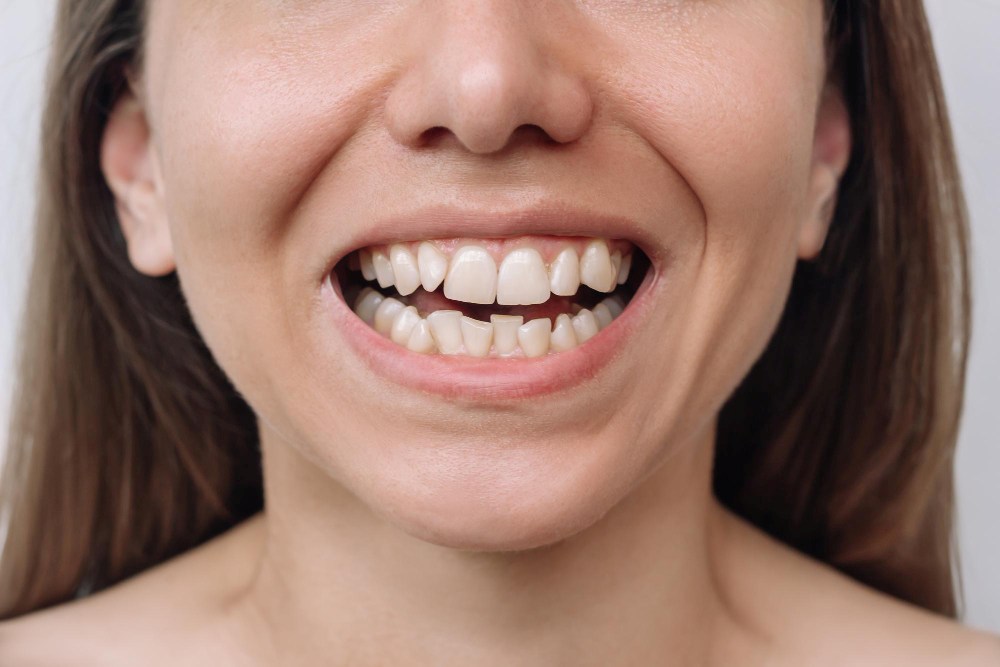
What Oral Health Risks Are Associated with Dental Crowding?

Beyond aesthetic concerns, dental crowding can make routine oral hygiene more difficult. Overlapping and irregularly positioned teeth may create areas that are harder to reach effectively with a toothbrush or dental floss, potentially allowing plaque to remain on tooth and gingival surfaces.
However, crowding itself should not be considered a direct cause of dental caries or periodontal disease. The development of these conditions is multifactorial and is strongly influenced by oral hygiene, fluoride exposure, diet, bacterial biofilm, smoking, systemic factors, and individual susceptibility.
Clinical considerations associated with significant dental crowding include:
- More Difficult Plaque Control: Overlapping or irregular tooth positions may make certain surfaces more difficult to clean effectively.
- Caries Considerations: Although difficult-to-clean areas may retain plaque, current evidence does not establish dental crowding alone as an independent cause of tooth decay.
- Periodontal Considerations: Crowding may complicate plaque control and contribute to gingival inflammation when oral hygiene is inadequate, but periodontal disease is multifactorial.
- Localized Tooth Wear: Irregular tooth contacts may contribute to uneven wear in selected patients, particularly when other occlusal or parafunctional factors are present.
- Functional Considerations: Significant malposition of teeth may alter tooth contacts or chewing patterns in some individuals, although many patients adapt without noticeable functional symptoms.
How Is Dental Crowding Diagnosed by Dental Specialists?
Accurate diagnosis of dental crowding requires a structured orthodontic examination combining clinical evaluation, photographic documentation, and appropriate radiographic or digital records. During the initial consultation, the clinician evaluates facial symmetry, profile, lip competence, dental relationships, and jaw function to establish a comprehensive diagnostic baseline.
Digital technologies have simplified space analysis in contemporary orthodontic practice. Intraoral optical scanners can capture accurate three-dimensional models of the dental arches, allowing clinicians to measure available arch space, tooth dimensions, crowding severity, and planned tooth movements.
Depending on the patient’s age and clinical findings, orthodontic diagnostic records may include:
- 3D Intraoral Digital Scans: Creating virtual study models for arch-space analysis, tooth-position assessment, and treatment planning.
- Panoramic Radiography: Evaluating tooth development, root morphology and angulation, unerupted or impacted teeth, and surrounding supporting structures.
- Lateral Cephalometric Imaging: Assessing skeletal jaw relationships, incisor inclination, and craniofacial growth patterns when clinically indicated.
- Facial and Intraoral Photography: Documenting facial profile, smile characteristics, dental midlines, occlusion, and baseline tooth positions.
What Role Does Early Intervention Play in Childhood Crowding?
Interceptive orthodontics, also known as Phase I treatment, may be used during the mixed-dentition period to address selected developing orthodontic problems. The American Association of Orthodontists recommends an initial orthodontic evaluation by age seven, although this does not mean that every child requires treatment at that age.
Selected problems—such as significant transverse maxillary constriction, premature loss of primary teeth with space loss, crossbites, or eruption disturbances—may benefit from early intervention. In appropriately selected cases, treatment can preserve or create space for developing permanent teeth and improve conditions for normal eruption.
Appliances such as palatal expanders, space maintainers, or other interceptive devices may be used when a clear clinical indication exists. Early treatment can simplify certain aspects of later orthodontic care, but it does not necessarily eliminate the need for comprehensive Phase II treatment during adolescence.
How Do Clear Aligners Treat Dental Crowding Effectively?
Clear aligner therapy provides a discreet and removable alternative to conventional fixed orthodontic appliances. Sequential thermoplastic aligners apply controlled forces to move teeth gradually toward planned positions.
Clear aligners can effectively manage many mild-to-moderate dental crowding cases, although treatment predictability depends on the type and magnitude of tooth movement, case complexity, attachment design, and patient compliance. Current evidence suggests that treatment outcomes can be comparable with fixed appliances in appropriately selected non-extraction mild-to-moderate crowding cases, while more complex movements may be less predictable.
Digital treatment-planning software allows orthodontists to stage movements such as controlled expansion, limited distalization, tipping, translation, and rotation. The planned digital position represents a treatment objective rather than a guarantee of the exact final tooth position.
To improve the control of specific movements—such as rotations, root positioning, or extrusion—clinicians may place small tooth-coloured composite attachments on selected teeth. These attachments improve aligner engagement and help deliver forces more effectively.
How Do Fixed Braces Manage Complex Dental Crowding?
Fixed appliances remain a widely used option for comprehensive orthodontic treatment and provide reliable control over a broad range of tooth movements. Metal or ceramic brackets are bonded to the teeth and connected with orthodontic archwires that generate controlled forces to gradually reposition the teeth.
During the initial alignment of crowded arches, flexible nickel-titanium archwires are commonly used because of their shape-memory and superelastic properties. These wires deliver relatively light, continuous forces that progressively align rotated and displaced teeth while levelling the dental arch.
Modern fixed orthodontic systems include several bracket designs:
- Traditional Metal Brackets: Durable stainless-steel brackets that provide reliable control for a wide variety of orthodontic movements.
- Aesthetic Ceramic Brackets: Tooth-coloured or translucent brackets designed to reduce the visual appearance of fixed appliances.
- Self-Ligating Brackets: Brackets with an integrated mechanism for securing the archwire without conventional elastic or metal ligatures.
- Lingual Braces: Custom or semi-custom brackets attached to the inner surfaces of the teeth, making them considerably less visible from the front.
What Non-Extraction Methods Resolve Dental Crowding?
When biologically appropriate, orthodontists may create the space required for alignment without removing permanent teeth. Treatment planning considers the amount of crowding, facial profile, incisor position, periodontal boundaries, skeletal relationships, and available arch dimensions before selecting a space-management strategy.
One commonly used non-extraction technique is interproximal reduction (IPR), also known as enamel reduction or slenderizing. IPR involves removing a carefully controlled amount of proximal enamel between selected teeth to create additional space.
Available clinical evidence has not demonstrated a clear increase in caries, periodontal damage, or persistent sensitivity when IPR is appropriately planned and performed within accepted enamel limits; however, the available evidence is limited and generally of low to very low quality. . However, the overall quality of evidence remains limited, so the amount of enamel reduction should be individualized and carefully controlled.
Non-extraction strategies may include:
- Arch Expansion: Increasing transverse arch dimensions within the patient’s skeletal and periodontal limits.
- Molar Distalization: Moving posterior teeth distally to create additional space within the dental arch in appropriately selected cases.
- Incisor Proclination: Controlled forward movement or tipping of anterior teeth when facial profile, periodontal support, and skeletal anatomy permit.
- Interproximal Reduction: Carefully removing small amounts of proximal enamel from selected teeth to gain cumulative space while maintaining healthy tooth contours.
When Are Tooth Extractions Indicated for Dental Crowding?
While conservative non-extraction techniques are preferred whenever biologically appropriate, some cases of significant dental crowding exceed the limits of safe arch expansion or tooth movement. Attempting to align severely crowded teeth without adequate alveolar bone support may move roots beyond the supporting cortical boundaries, potentially compromising periodontal health and long-term stability.
In selected patients with substantial crowding, protrusive incisors, limited periodontal boundaries, or unfavorable skeletal and soft-tissue characteristics, therapeutic tooth extraction may provide the space required for stable alignment. When premolar extractions are indicated, first premolars are among the teeth commonly considered, although the extraction pattern is individualized according to the patient’s diagnosis and treatment goals.
The extraction spaces are then closed using fixed appliances, clear aligners, or a combination of orthodontic mechanics. The objective is to align displaced teeth while maintaining appropriate incisor position, periodontal support, occlusion, and facial balance.
How Do Costs for Correcting Dental Crowding Compare Across Countries?
The cost of orthodontic treatment varies according to the severity of the malocclusion, the appliance selected, treatment duration, clinician experience, geographic location, and the services included in the treatment plan.
Orthodontic treatment in Turkey may be less expensive than comparable private treatment in the United Kingdom, the United States, or other European countries. However, fees vary considerably between clinics and cases, so international price comparisons should be considered approximate rather than fixed.
The comparative pricing table below provides indicative ranges for common orthodontic treatments:
How Does Dental Crowding Relate to Bite Mechanics and Musculoskeletal Health?
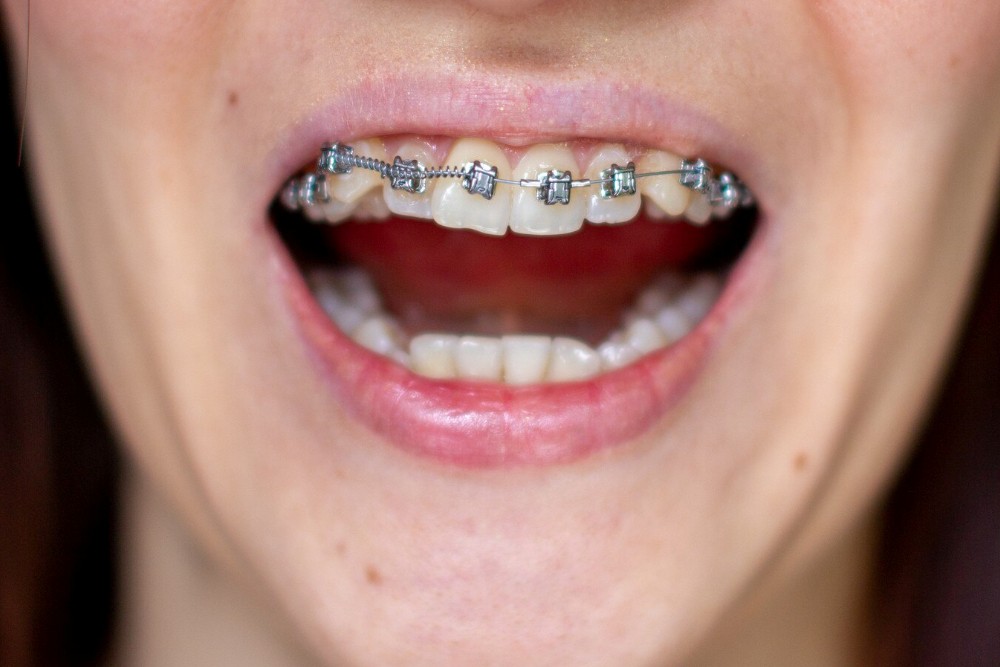
Dental crowding can alter tooth contacts and chewing patterns, but current evidence does not support a simple cause-and-effect relationship between crowding or malocclusion and temporomandibular disorders. TMD is multifactorial and may involve muscular, joint, behavioral, and psychosocial factors.
Orthodontic treatment should therefore be planned primarily to improve dental alignment, function, oral hygiene access, and occlusal stability rather than as a treatment for TMD. When crowded teeth contribute to irregular tooth contacts or inefficient chewing patterns, orthodontic alignment may help establish more stable functional relationships between the teeth.
The goal of orthodontic treatment is to create stable and functional tooth contacts within the patient’s skeletal, periodontal, and anatomical limits while supporting comfortable mastication and long-term oral health.
Why Is Orthodontic Retention Essential After Treating Crowding?
Achieving satisfactory tooth alignment is an important treatment milestone, but maintaining the result requires an appropriate long-term retention strategy. Following active orthodontic treatment, the surrounding alveolar bone, supracrestal gingival fibres, and periodontal ligament continue to remodel around the repositioned teeth.
Long-term retainer wear is the principal strategy used to reduce orthodontic relapse, although some degree of tooth movement can still occur over time as part of normal physiological ageing and continued tissue remodeling.
Orthodontists use several retention options depending on the patient’s occlusion, original malocclusion, periodontal condition, and risk of relapse:
- Fixed Bonded Retainers: A thin wire bonded to the lingual surfaces of selected anterior teeth to provide continuous stabilization.
- Removable Clear Retainers: Transparent thermoplastic retainers worn according to an individualized schedule to maintain tooth position.
- Hawley Retainers: Acrylic-and-wire removable appliances that maintain arch form while allowing limited occlusal settling.
- Dual Retention Protocols: A combination of fixed and removable retention when additional long-term stabilization is considered beneficial.
What Questions Should You Ask During an Orthodontic Consultation?
A comprehensive orthodontic consultation is the most important step in understanding your diagnosis, treatment options, expected duration, and long-term retention requirements. Discussing aesthetic goals, lifestyle preferences, medical and dental history, and treatment priorities allows the orthodontic team to develop an individualized plan.
During the consultation, it is useful to discuss the biological advantages and limitations of extraction and non-extraction approaches for your specific degree of crowding. Retention protocols, appointment intervals, appliance options, and expected treatment outcomes should also be reviewed before treatment begins.
Key questions to ask during an orthodontic consultation include:
- Severity and Space Deficit: What is the measured space discrepancy in my dental arches, and how severe is the crowding?
- Appliance Options: Am I a suitable candidate for clear aligners, or would fixed braces provide more predictable control for the movements required?
- Space Management: Will treatment require interproximal reduction, arch expansion, distalization, or selective tooth extraction?
- Retention Strategy: What retention protocol will be recommended after active treatment to help maintain the result long term?