English
 Turkish
 Deutsch

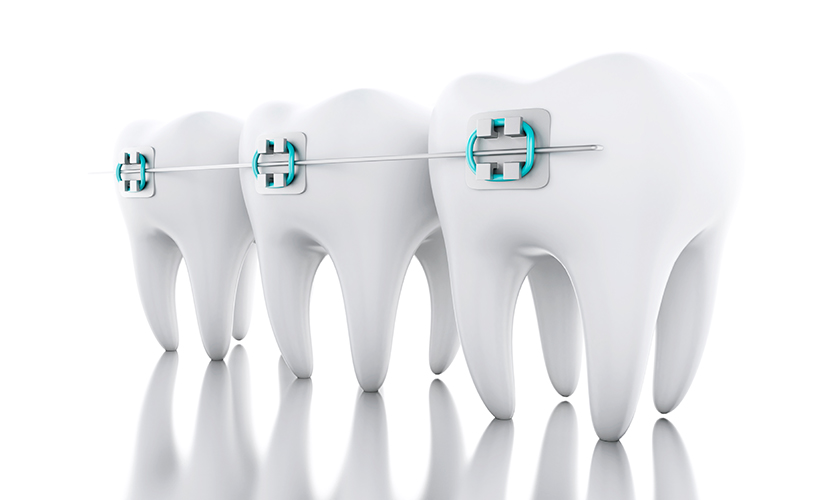
Braces are medical devices used to correct dental crowding or misalignment. Commonly known as “orthodontic braces,” they are preferred when alignment issues are detected and help position the teeth in a more ideal arrangement. However, it is not realistic to expect immediate results from orthodontic treatment. Braces correct dental crowding over the medium to long term. We will also discuss possible issues that may arise during brace use, including the likelihood of breakage. Before that, let’s take a look at the different types of braces.
Metal Braces
When people think of braces, metal brackets are typically what come to mind. These brackets are bonded onto the teeth and are made from stainless steel. Until recently, metal brackets were produced in larger sizes; however, they are now manufactured in smaller, more aesthetic forms. Archwires are also now thinner than before. The archwire is secured to the brackets, allowing the teeth to be aligned properly. In some cases, metal braces are preferred when the goal is to complete treatment as quickly as possible.Damon Braces
Damon braces have a similar appearance to metal ones. Also known as self-ligating braces, these brackets feature built-in sliding mechanisms that allow the archwire to move freely within the bracket slot. Since the wire is secured by the bracket’s cap rather than elastic ties, no metal ligatures are needed. Due to reduced friction, these braces may offer a shorter overall treatment time.Ceramic Braces
Ceramic braces are opaque white and offer a more aesthetic appearance compared to metal braces, making them especially appealing to patients concerned about looks. However, they are slightly larger in size, which may cause more food buildup if oral hygiene is neglected. That said, proper oral hygiene prevents this from becoming an issue. Another important feature of ceramic braces is that they are more fragile than metal ones, which is why they are not frequently recommended for children.Invisalign (Clear Aligner Treatment)
This treatment uses transparent, removable trays instead of brackets and wires. These aligners are custom-made for each patient after digital measurements are taken. The number of trays varies depending on the severity of the misalignment.Lingual Braces
Lingual braces are generally more costly and are entirely custom-made for each patient. The wires and brackets are placed on the inner surfaces of the teeth, making them completely invisible when the patient smiles or speaks. This aesthetic advantage makes them a highly desirable option.When Are Braces Used?
There is no single condition that necessitates the use of braces. Here are the most common situations in which braces are recommended:- Crowded or crooked teeth
- Jaw alignment problems
- Disproportion between upper and lower jaws
- Teeth overlapping one another
- Gaps between the teeth
- Rotated teeth
How Should Braces Be Maintained?
 Throughout orthodontic treatment, oral hygiene must never be neglected. The presence of braces does not prevent teeth from being brushed. Teeth must be cleaned regularly, and oral hygiene should be strictly maintained. Toothbrushes and dental floss do not damage braces and can be safely used. It is important to ensure that no food particles remain between the brackets. Interdental brushes can also be used to clean the spaces around the brackets and wires. Your dentist can guide you on how to properly clean these areas.
Brushing and flossing should be done at least three times a day. After meals, rinsing the mouth thoroughly with water is essential. Although some people worry that braces make oral hygiene difficult, this is not the case. Brackets and wires are very small devices, and spending just a few minutes cleaning them is usually sufficient. No special or additional procedures are needed for their maintenance.
Throughout orthodontic treatment, oral hygiene must never be neglected. The presence of braces does not prevent teeth from being brushed. Teeth must be cleaned regularly, and oral hygiene should be strictly maintained. Toothbrushes and dental floss do not damage braces and can be safely used. It is important to ensure that no food particles remain between the brackets. Interdental brushes can also be used to clean the spaces around the brackets and wires. Your dentist can guide you on how to properly clean these areas.
Brushing and flossing should be done at least three times a day. After meals, rinsing the mouth thoroughly with water is essential. Although some people worry that braces make oral hygiene difficult, this is not the case. Brackets and wires are very small devices, and spending just a few minutes cleaning them is usually sufficient. No special or additional procedures are needed for their maintenance.
Ceramic Braces for Adult Patients
Adult patients often prefer ceramic braces because their color closely resembles the natural shade of teeth. This helps reduce aesthetic concerns during treatment. With ceramic braces, many adult patients feel more comfortable with their smile throughout the treatment process. Although orthodontic issues in adults can be corrected effectively, it is important to note that results generally require a medium to long-term treatment period.Potential Issues During Braces Use
In most cases, braces do not cause problems. Only rarely do patients experience complications. Both children and adults usually complete treatment without difficulties. However, some minor issues may occur, such as:- Broken or loosened brackets
- Detached or broken bands
- Breakage of the archwire
- The wire irritating the mouth
- The wire slipping out of the bracket slot
- Small sores on the inner cheeks or lips
Why Do Brackets Break?
All types of brackets are produced using highly durable materials, so breakage is uncommon. However, brackets may break if hard or shell-covered foods are bitten or chewed incorrectly. Breakage may also occur if the adhesive used during application weakens or fails over time. If any problem occurs with your braces, it is easily repairable. You may write your questions about orthodontic treatment in the comment section below.