English
 Turkish
 Deutsch

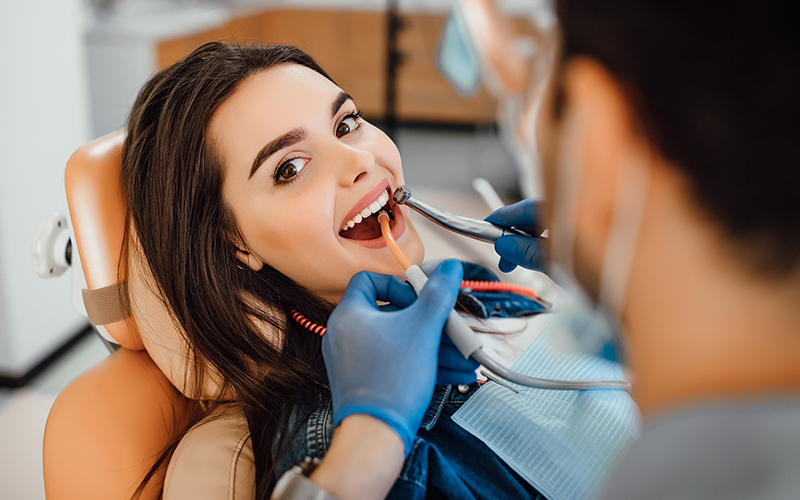
Suture-Free Implant has become one of the most popular dental procedures in recent years. Dental implant treatment provides an aesthetic and permanent solution to missing teeth. As tooth loss is increasingly common, the number of patients benefiting from implant therapy continues to grow each year. Especially for patients who prefer not to use removable dentures, this method is often the ideal option.
Implant treatment can be performed using various techniques, one of which is the suture-free (flapless) method. In traditional implant procedures, a titanium screw-like fixture is inserted into the jawbone. However, in a suture-free implant procedure, no stitches are required after the implant is placed. Instead, the area is closed using minimally invasive techniques without making any incisions in the gum tissue. This approach offers several advantages—most notably, a shorter treatment time and a lower risk of infection.
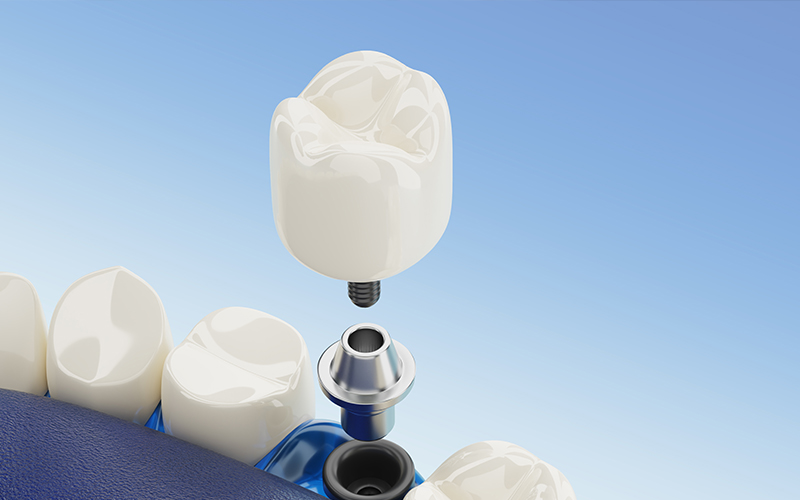
One of the key features of this method is that the jawbone is not exposed during surgery. Implant placement involves two main stages: inserting the titanium screw into the jawbone and then attaching the prosthetic crown (made of porcelain or ceramic) on top. Both stages are critical, but in suture-free implants, the first stage is especially important. Since no flap is opened, intervention is more difficult if complications occur. Let’s now examine the advantages and disadvantages of this technique before describing how it is performed.
Advantages of Suture-Free Implants
When compared to traditional implant surgery, suture-free implants offer significant benefits for patients. The main advantages include:
- The overall treatment process is much shorter than that of traditional implant surgery.
- The implant screw can be positioned more easily and precisely in the jawbone.
- Postoperative complications such as bleeding, swelling, or infection are significantly reduced; in many cases, they do not occur at all.
- Since no incision or sutures are involved, patient anxiety is greatly minimized, making the experience more comfortable.
- The aesthetic and functional results are highly satisfactory, contributing to both smile design and chewing efficiency.
Disadvantages of Suture-Free Implants
Like all medical procedures, suture-free implants have a few limitations and potential disadvantages:
- The patient’s jawbone must have adequate thickness and density; otherwise, this method is not possible.
- Costs are generally higher compared to traditional implant placement.
- This procedure must be performed by an experienced and well-trained dentist to ensure proper planning and avoid complications.
How Is Suture-Free Implant Treatment Performed?
Before the procedure, radiographic imaging is performed to assess whether the patient’s jawbone is suitable for flapless implant surgery. The thickness and density of the bone cannot be evaluated by visual examination alone; therefore, X-rays or 3D scans are required for accurate diagnosis and treatment planning.
Local anesthesia is applied to ensure patient comfort. Once numb, a tiny hole (created with a surgical punch) is made in the gum to access the jawbone. Through this small opening, the implant site is prepared, and the titanium screw is inserted. The entire process usually takes about 5 to 10 minutes. Because no stitches or incisions are required, patients experience minimal discomfort and can return to their daily activities immediately.
Suture-Free Implant Prices
Patients who want to restore missing teeth without gum incisions often choose suture-free implant treatment. However, there is no fixed price for everyone—the cost varies depending on several factors. These include the number of implants needed, the brand and quality of implant materials, and whether any preliminary dental treatments (such as bone grafting or gum therapy) are required beforehand.
For an accurate quote, patients should consult their dentist for an evaluation. After the clinical examination and treatment planning, a personalized cost estimate is provided.
Benefits of Suture-Free Implants
The suture-free implant technique offers numerous benefits, such as:
- Minimal gum trauma and reduced bleeding.
- Suitable for patients taking blood-thinning medication.
- Quick and comfortable procedure, allowing patients to resume daily routines immediately.
- The implant placement process typically takes only about 10 minutes.
- Lower risk of infection and postoperative swelling.
- No need for stitches or sutures, reducing both discomfort and stress.
- Pain and inflammation after the procedure are rare.
Who Is Suitable for Suture-Free Implant Treatment?
Not all patients are candidates for suture-free implant procedures. The key requirement is adequate bone volume and density in the jaw. If the bone structure is sufficient, the implant can be placed using a minimally invasive (closed) surgical approach.
To determine eligibility, the dentist evaluates 3D imaging results to measure bone quality and volume. Based on this assessment, the patient is informed whether they qualify for flapless implant treatment. If suitable, the procedure offers a highly comfortable and efficient solution for missing teeth.