English
 Turkish
 Deutsch



Tooth decay can develop due to poor oral hygiene, the composition of saliva, or various other factors. If left untreated, it can lead to severe toothache. Bacteria that form in the mouth are the primary cause of tooth decay. In addition, acids and food residues are among the factors that contribute to cavities. In this article, we will explain what problems tooth decay can cause, what its symptoms are, and how it is treated. First, let’s look at who is more likely to experience this problem.
Who Is Tooth Decay Most Common In?
Foods rich in flour and sugar are among the main triggers of tooth decay. For this reason, cavities are more common in people whose diets are high in carbohydrates and sugar. Among these individuals, those who neglect oral hygiene experience decay much more frequently.
A decrease in the amount of saliva in the mouth and dry mouth can also lead to tooth decay. This is because saliva is one of the natural secretions that help protect teeth from decay. When the amount of saliva decreases, teeth become more vulnerable to bacteria, which promotes cavities. As a result, people with diseases that reduce saliva flow or those who use medications that cause dry mouth often struggle with tooth decay.
Tooth decay is also common in people who habitually bite hard objects. Biting on items such as pens or the arms of glasses can cause gradual wear of the teeth over time. This can then set the stage for decay. Finally, tooth decay is frequently seen in people who do not clean their teeth and mouth regularly.
What Are the Symptoms of Tooth Decay?

In general, the symptoms of tooth decay can be listed as follows:
- Sensitivity in the tooth
- A sharp twinge or “zing” sensation when consuming hot or cold foods and drinks
- Mild, moderate, or severe toothache
- Gray, brown, or black discoloration on the surface of the tooth
- Pain when biting or chewing
- Visible holes or pits on the surface of the tooth
Of course, these symptoms do not always appear immediately when tooth decay begins. Especially toothache tends to occur only after the decay has progressed to a certain level. Therefore, even if decay has already started, the symptoms listed above may not be noticeable in the early stages.
How Is Tooth Decay Treated?
When a patient develops tooth decay, possible treatment options can generally be grouped under four main headings.
Filling
This is the most commonly used treatment method. The decayed tooth tissue is removed and the missing part of the tooth is restored with a filling material. In this way, the patient’s complaints are relieved and normal tooth function is restored.
Crown
Sometimes, decay progresses to an advanced stage. In such cases, a large amount of tooth tissue must be removed. Since a filling material alone cannot provide adequate strength, a crown is used. This involves covering the tooth with a specially prepared structure. Afterward, a crown that looks completely natural is placed on the tooth.
Root Canal Treatment
If the decay has reached the nerve (pulp) of the tooth, root canal treatment is required. The goal of this treatment is to save the roots of the tooth and restore its function.
Early Treatment
In the very early stages of decay, your dentist may apply a fluoride treatment to the affected area. This treatment helps strengthen the enamel and can stop the progression of the cavity. Regular follow-up appointments are then scheduled to monitor whether the decay continues to progress.
What Can Tooth Decay Lead To?

Tooth decay is a dental disease that absolutely must be treated. If left untreated, the problems experienced by patients may become more severe. Intense toothache, in particular, can negatively affect daily life, social activities, and even work performance. For this reason, cavities should never be ignored and should be treated as early as possible. If decay is not treated, the following problems may occur:
- The patient’s quality of life declines
- Bad breath develops
- Infection may form and pus can accumulate around the tooth
- It may become very difficult to bite and chew food
- If the infection spreads throughout the body (sepsis), it can pose a life-threatening risk
At this point, many people wonder whether cavities can heal on their own. Medically, this is not possible. Cavities in a tooth cannot spontaneously improve or regenerate. The only way to get rid of tooth decay is through treatment. The earlier treatment is started, the shorter and more successful the treatment process will be. Even if you only feel a slight ache or sensitivity, you should see a dentist without delay.
Is Tooth Decay Genetic?
Not every case of tooth decay is genetic. However, a genetic predisposition to tooth decay can exist. For individuals who are genetically more prone to cavities, oral hygiene and tooth care are especially important. Such individuals should be particularly careful not to skip regular dental check-ups.
How Can Tooth Decay Be Prevented?
Overall, tooth decay is a preventable condition. Proper and consistent oral hygiene is the most important requirement for prevention. To help prevent cavities, the following points should be taken into consideration:
- Brush your teeth three times a day and clean between your teeth with dental floss.
- It is especially important to brush your teeth before going to bed at night and after consuming sugary foods.
- Follow a balanced and healthy diet.
- Use a mouthwash recommended by your dentist for daily oral hygiene.
- Drink highly alkaline water regularly every day.
- Include foods rich in calcium in your diet.
- Never use your teeth to crack hard-shelled foods such as nuts or walnuts.
- Avoid habits such as chewing on pens.
- Do not neglect regular oral and dental check-ups.
What Should Be Done When a Tooth First Starts to Decay?
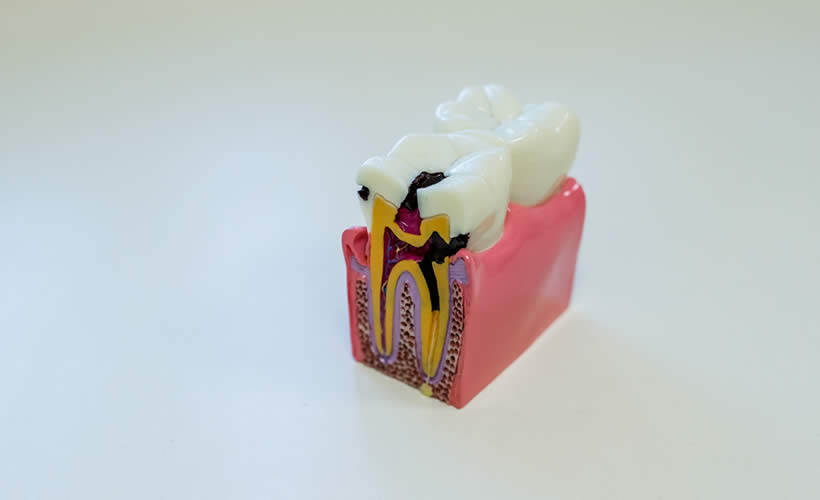
As soon as a tooth begins to decay, intervention is required. You should not wait for the decay to advance significantly or for severe toothache to appear. When treated at an early stage, a tooth can often be saved with a simple filling. The decayed area is cleaned, and then the cavity is filled with a suitable dental filling material.
In this way, further progression of the decay is prevented. In the early stages, a cavity may not cause any pain, which means it can easily go unnoticed. However, if you attend regular dental check-ups, your dentist can detect early decay before it causes symptoms and start treatment right away.
How Can Tooth Decay Be Prevented in Babies?
Tooth decay in babies, commonly known as “baby bottle decay,” should definitely be taken seriously. To prevent it, the following points are important:
- Dipping a pacifier or bottle teat in sugar or sweet substances is harmful to teeth.
- Tooth cleaning should begin when babies are around 6–8 months old.
- At first, teeth can be gently cleaned with a clean, soft cloth (such as gauze or muslin).
- Later on, a soft-bristled baby toothbrush can be used.
- If there are signs of decay, a dentist should be consulted without delay.
You can write your questions about this topic in the comments section.