English
 Turkish
 Deutsch


Teeth whitening treatment is a common choice for people who want to have whiter and more aesthetic-looking teeth. For various reasons, discoloration can occur on the teeth. Sometimes foods and drinks cause staining and discoloration, and sometimes medications can lead to the same result. Today, however, it is possible to achieve a whiter appearance on the teeth. For this, you can benefit from professional teeth whitening methods performed by dentists. In this way, it is possible to lighten the teeth by several shades. We will also cover whether every tooth can be whitened, how the procedure is performed, and other frequently asked questions. First, let’s look at how many different whitening methods there are.
How Many Types of Teeth Whitening Methods Are There?
In general, we can group teeth whitening methods under four main headings:
- At-home whitening
- In-office whitening
- Single-tooth whitening (internal whitening of root canal–treated teeth)
- Combined whitening (using both at-home and in-office methods together)
By evaluating several factors together, such as the degree of discoloration or staining and the tooth structure, the dentist can recommend the most suitable teeth whitening method for the patient. You can consult your dentist for this.
How Does Teeth Whitening Work?
How teeth whitening is performed varies depending on which method is chosen. Depending on the procedure, some patients may experience mild sensitivity, while others may feel more intense discomfort. It is a treatment that can cause sensitivity in the teeth.
Can Every Tooth Be Whitened?
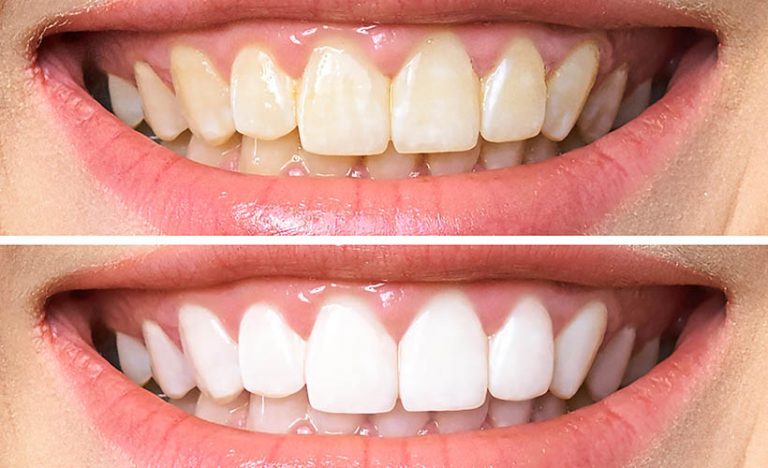
First of all, it is important to determine what is causing the discoloration and what the patient expects from the whitening procedure. In most cases, a noticeable whitening effect can be achieved with this treatment. However, if there are old fillings or crowns in the mouth, or if there is severe age-related discoloration, it may not be possible to achieve a very dramatic whitening effect. Your dentist’s assessment is crucial here. After a simple examination, you can be informed about the level of whitening that is realistically achievable.
How Is Teeth Whitening Performed?
The procedure changes depending on which teeth whitening method is used. For example, in-office whitening is performed by the dentist in a clinical setting and is usually completed in about one hour. With in-office whitening, it is possible to achieve teeth that are 3 to 4 shades lighter. In this method, a whitening gel is applied to the stained tooth surfaces.
Home bleaching, that is, at-home teeth whitening, is a longer process compared to the in-office method. Depending on the degree of discoloration, it can take about 5 to 7 days to complete. Whitening gels prepared by the dentist are placed into custom trays and worn so that the gel remains in contact with the tooth surfaces for around 8 hours a day. This provides gradual whitening of the teeth.
Can Teeth Whitening Methods Be Used Together?
Yes, it is possible to use teeth whitening methods in combination. First, the patient’s needs must be assessed. The level of discoloration on the teeth should also be determined. Afterwards, the number of sessions and which whitening methods will be used are planned. Different methods can also be used alternately. However, it is not necessary to use multiple methods together for every patient.
Does Teeth Whitening Damage the Enamel?

There is a lot of misinformation about teeth whitening among the public. One of these is the belief that whitening harms the teeth. In fact, when materials and methods appropriate for the patient are used, and the whitening procedure is performed by a dentist, it does not damage the teeth. The enamel layer is not harmed by professional whitening. However, if you have existing problems with your teeth or gums, you should have these treated first.
There are many products on the market that claim to have an instant whitening effect on teeth. It is essential to check whether these products are approved by the Ministry of Health or an equivalent regulatory authority. Using products that are not officially approved may damage your teeth. Therefore, instead of trying random methods, it is much safer to consult your dentist and follow the whitening options they recommend.
Who Is Not Suitable for Teeth Whitening?
In some cases, teeth whitening may be unsuitable or risky. We can briefly list who should avoid this procedure as follows:
- People with exposed tooth roots
- Those with gum disease
- Those with severe tooth sensitivity
- People with untreated tooth decay
- Individuals under 15 years of age
- Pregnant women
- People whose tooth enamel is highly translucent
- Those who have fillings or restorations that will not respond to whitening
In addition, it is important to mention that for the first two weeks after whitening, consuming tea, coffee, and tobacco products is not recommended. For patients who are not willing to pause their consumption of tea, coffee, and tobacco, the procedure is generally not advised, because in that case, it is very likely that discoloration and staining will soon reappear on the teeth.
How Long Does the Effect of Teeth Whitening Last?

The duration of the whitening effect is not the same for every patient. Of course, you should not assume that once you have your teeth whitened, they will never stain or discolor again. Over time, color changes can reappear for various reasons. However, if you maintain effective oral hygiene, avoid or limit tea, coffee, and tobacco use, and follow your dentist’s recommendations, it is possible to preserve the achieved whiteness for a long period.
Which Type of Teeth Whitening Method Is More Suitable?
The answer to this question differs from person to person. For some patients, excellent results can be obtained with at-home whitening methods. For others, different whitening techniques may be required to successfully eliminate discoloration. Therefore, you should consult your dentist about which method is most appropriate for you.
Is the Effect of Teeth Whitening Permanent?
You should not expect the effect of a teeth whitening procedure to last for a lifetime. Over time, teeth may become discolored again for different reasons. Foods and beverages you consume, as well as certain medications, can cause yellowing and staining. Especially if oral hygiene is neglected or if drinks like tea and coffee that can stain the teeth are consumed frequently, it will be difficult to maintain the whiteness. However, in such cases, it is possible to repeat the whitening procedure. Even though it is not recommended to apply whitening too frequently, it can be repeated at appropriate intervals to restore a whiter appearance.
Clinics Offering Teeth Whitening in Çerkezköy
It is possible to have teeth whitening treatment in Çerkezköy. Residents of this area do not need to travel to other districts to benefit from this procedure. You can write your questions about the subject in the comments section.

Phd. Dr. Ezgi AKÇE
Maslak Chief Physician - Managing Director
Field of Interest: Periodontology